Serving Tamarac, FL · (954) 833-6103

Tamarac Chimney Masonry

When a Tamarac chimney needs masonry repair

Most homeowners in Tamarac do not think about the chimney until something visible goes wrong: a hairline crack in the brick face, a chunk of mortar on the roof, or a rust stain running down the side of the stack. In a dry climate a masonry chimney can go decades between repairs. Here, sitting in near-constant humidity with heavy summer rain and salt carried inland from the coast, the same structure works much harder to hold together. Our chimney masonry repair service is built around those local realities rather than a generic checklist.

This page covers the full range of repair work — from repointing tired mortar joints to rebuilding a crown, resealing flashing, and replacing a cap. If you searched for chimney repair near me because you noticed a problem, the first step is figuring out whether you are dealing with a surface cosmetic issue or the early stage of water intrusion. Those two things look similar from the ground and are very different in cost and urgency.

Whether your chimney vents a wood-burning fireplace, a gas appliance, or a decorative feature that came with the house, the masonry still has to keep water out. Once moisture gets behind the brick it moves through the whole assembly, and that is where small repairs turn into large ones. If you are weighing a repair against a full rebuild, our chimney masonry repair repair and chimney masonry repair installation pages walk through those decisions in more detail.

What a chimney masonry repair service covers

Chimney repair is not one job — it is several related repairs that often show up together once water has been getting in.

Repointing and tuckpointing

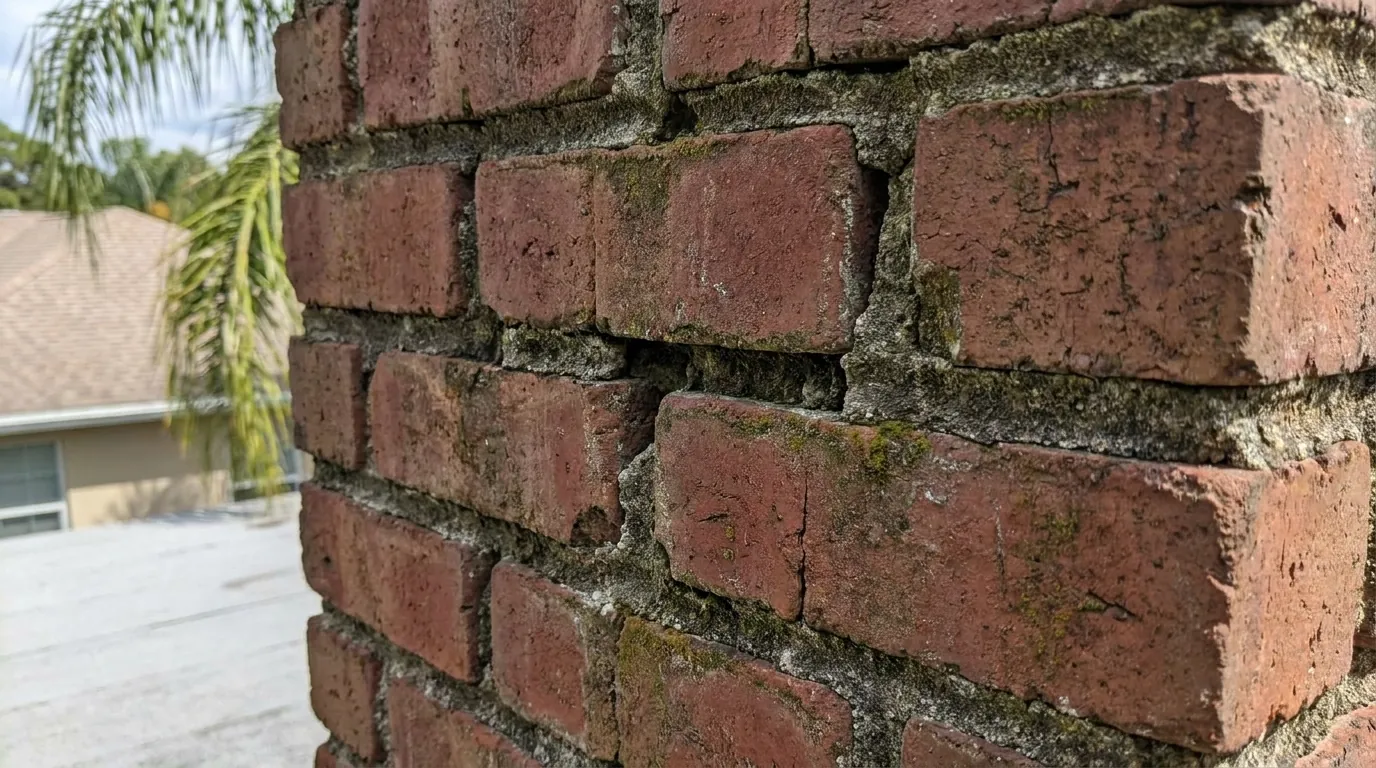
When mortar joints crumble, we grind out the failed material and pack in fresh mortar matched to the existing brick. This is the single most common repair in a humid climate, because mortar erodes faster than the brick it holds.

Brick replacement and spalling repair

Spalling is when the face of the brick flakes off after trapped water freezes or the surface simply breaks down. We remove and replace affected units before the damage spreads through the stack.

Chimney crown repair

The crown is the concrete slab at the very top. Cracks there let rain run straight into the chimney. We patch or rebuild the crown so water sheds outward instead of soaking in.

Flashing repair and resealing

Flashing seals the joint where the chimney meets the roof. Failed flashing is a leading cause of ceiling stains near the chimney, and we reseal or replace it to stop the leak at its source.

Chimney cap repair and replacement

A cap keeps rain, debris, and animals out of the flue. Caps rust and loosen in salt-laden coastal air, so replacing a corroded cap is a small job that prevents bigger interior damage.

Waterproofing and sealing

After repairs, a breathable masonry sealer helps the brick shed water while still letting trapped moisture escape — an important detail given how much humidity this region carries.

How the repair process works

A repair starts with figuring out where water is getting in, because chasing the visible symptom without finding the source rarely holds.

  1. Inspection from ground and roof

    We look at the crown, flashing, cap, and every face of the brick, then trace any interior stains back to their likely entry point. Small cracks and a leak in the living room are often the same problem.

  2. Explaining what we found

    You get a plain description of what needs work, what can wait, and why. We separate cosmetic issues from active water intrusion so you can prioritize.

  3. Doing the masonry work

    Depending on the scope, that means repointing joints, swapping damaged brick, rebuilding the crown, or resealing flashing — matching materials to the existing structure.

  4. Sealing and cleanup

    Once the structure is sound, we apply a breathable sealer where appropriate and leave the roof and surrounding area clean.

How Tamarac's climate changes the work

South Florida does not put chimneys through freeze-thaw cycles, but it makes up for it with relentless moisture. High humidity means the masonry rarely dries out fully, and mortar that stays damp breaks down joint by joint. Add the summer storm season, when wind-driven rain hits the stack from every direction, and any small gap in the crown, cap, or flashing becomes a path for water.

Salt air moving inland from the coast accelerates corrosion on metal components — caps, flashing, and any exposed fasteners rust faster here than they would well inland. Tamarac's sandy soils and high water table also matter for the chimney's footing: ground that shifts or stays saturated can put uneven stress on the base of the structure, opening cracks that show up higher in the brickwork.

Because of all this, waterproofing and drainage details carry more weight than they would in a dry climate. We prioritize keeping water out at the top — a sound crown and cap — and sealing the roof joint properly, then let the brick face manage the humidity it will inevitably see. If you want the full picture on scope and pricing, our article on chimney repair cost in Tamarac breaks down what drives the numbers.
Have a cracked or leaking chimney?

If you have noticed cracked brick, crumbling mortar, a rusted cap, or a stain near the chimney, reach out and describe what you are seeing. We serve Tamarac and nearby towns.

Serving Tamarac, Sunrise, Lauderhill, Margate, Coral Springs, Plantation, and Coconut Creek.

Frequently asked questions

How do I know if my chimney needs masonry repair?

Common warning signs include cracked or missing mortar between bricks, brick faces that are flaking or crumbling, a rust-stained or loose cap, and water stains on the ceiling or wall near the chimney. Any of these means water is likely getting into the structure and should be looked at.

Is a small crack in the brick something to worry about?

It depends on where it is. A surface crack in the brick face may be cosmetic, but a crack in the crown or a gap at the flashing lets water into the whole assembly. In our humid climate, small openings tend to get worse quickly, so it is worth having them checked before they spread.

What causes mortar to fail so fast in Tamarac?

Constant high humidity keeps mortar joints from fully drying, and heavy seasonal rain drives water into any gaps. Over time the mortar erodes faster than the brick around it. Repointing — grinding out old mortar and packing in fresh — is the standard fix.

Do you handle chimney flashing and cap problems too?

Yes. Flashing and cap issues are often the actual source of a leak that shows up as a masonry stain. We reseal or replace flashing where the chimney meets the roof and repair or replace corroded caps, which rust quickly in coastal air.

Which areas do you serve?

We work in Tamarac and the surrounding towns of Sunrise, Lauderhill, Margate, Coral Springs, Plantation, and Coconut Creek.