Chimney Crown and Cap Replacement
A cracked crown or missing cap lets water straight into your chimney. Learn how chimney crown repair and cap replacement work in Tamarac, FL.
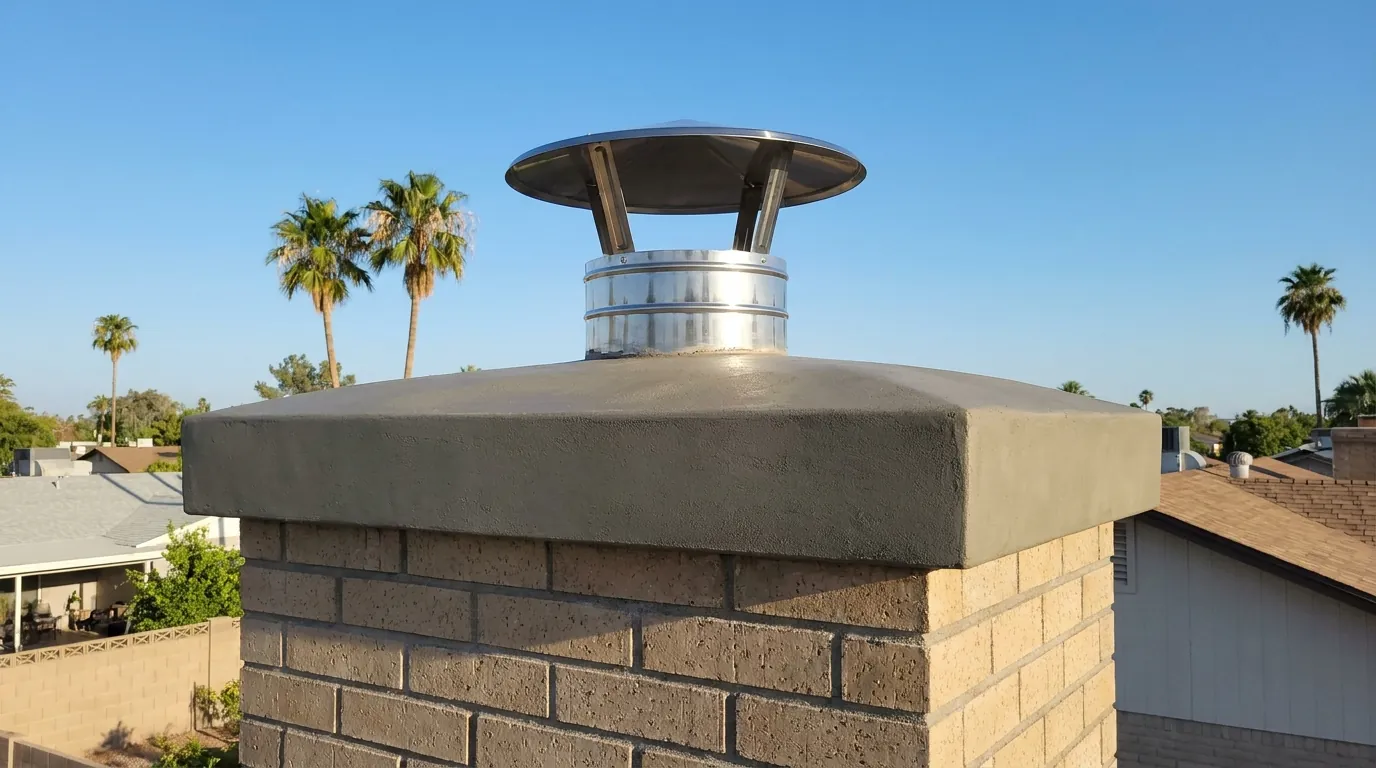
The crown and cap are your chimney's umbrella
The crown is the sloped concrete or mortar slab across the top of the chimney, and the cap is the metal cover over the flue opening. Together they shed rain off the top of the stack and keep water out of the flue. When either one fails, water pours straight into the masonry and down the flue — and most chimney leaks in Tamarac start right here, at the top.
Warning signs include visible cracks across the crown, chunks of crown material on the roof, rust streaks below a failing cap, water staining inside the firebox, or no cap at all. A cracked crown is one of the most common things a home inspector writes up, and it's also one of the most cost-effective repairs to make before the water damage spreads. If you're selling, our article on what inspectors flag covers how crowns and caps come up during a sale.
How crown and cap replacement is done
The crown and cap work as a pair, so they're usually addressed together.
-
Remove the failed crown
The cracked or deteriorated crown is broken out down to the top course of brick. We check that the top brick and the flue tile are sound before building the new crown on top of them.
-
Form and pour a new crown
A new crown is formed with an overhang (a drip edge) so water drips clear of the brick instead of running down the stack. It's sloped away from the flue and given an expansion gap around the flue so it won't crack as the two materials move at different rates.
-
Fit a new cap
A stainless cap is fitted over the flue opening to keep rain, debris, and animals out while letting smoke and gases exit. Stainless holds up far better than plain steel in Tamarac's salty, humid air.
-
Seal and finish
The crown is sealed to resist water absorption, and the cap is secured. We confirm water sheds cleanly off the finished top before leaving.
Why Tamarac is hard on crowns and caps
Intense sun, heavy rain, and constant humidity work the crown year-round, and the small temperature swings that do occur drive moisture into any existing hairline crack. Salt in the coastal air is especially tough on metal, which is why a plain steel cap rusts out quickly here while stainless lasts. A crown poured without a drip edge sheds water straight onto the brick, so a proper overhang matters more in this climate, not less.
Because the crown and cap are the first line of defense, they're worth checking any time other chimney work is planned. If the flue below them is older unlined clay, replacing the cap is also a natural moment to consider stainless steel flue relining while the top is open.
Frequently asked questions
What's the difference between the crown and the cap?
The crown is the solid sloped slab across the whole top of the chimney; the cap is the metal cover over just the flue opening. The crown sheds rain off the masonry, and the cap keeps water, debris, and animals out of the flue. They work together, so both matter.
Can a cracked crown be sealed instead of replaced?
Hairline cracks can sometimes be sealed if the crown is otherwise sound. But once the cracks are wide, spalling, or letting water through, sealing only buys time — a new crown with a proper drip edge is the lasting fix. An inspection determines which case you have.
Why does the cap need to be stainless steel?
Tamarac's humid, salt-laden air rusts plain steel caps quickly. A stainless cap resists that corrosion and holds up far longer, which is why it's worth the difference on a coastal chimney.
Will replacing the crown and cap stop my leak?
Often yes, because the top of the stack is where most chimney leaks start. If water is also entering at the roof line, the flashing may need attention too, so we check both rather than assuming the crown is the only source.
Talk to someone about your job
Call to describe the problem and get a quote for work in Tamarac, FL.