Chimney Flashing and Leak Repair
Water stains near the chimney after rain? Chimney flashing repair in Tamarac stops leaks where the stack meets the roof. See the signs and the fix.
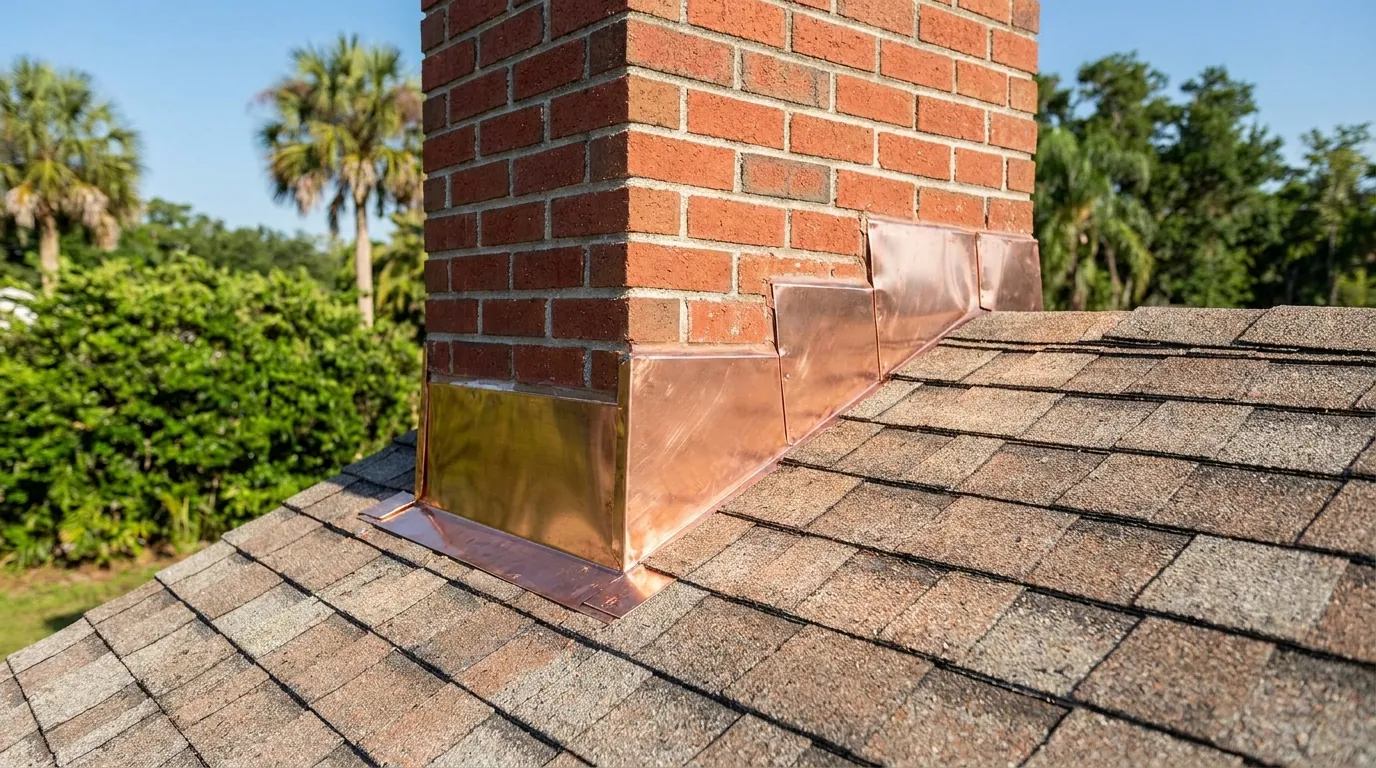
Where chimney leaks really come from
Flashing is the layered metal that seals the joint where the chimney passes through the roof. It's one of the most common sources of chimney leaks, because it has to stay watertight through years of sun, expansion, roof movement, and the heavy, wind-driven rain Tamarac gets. When it lifts, corrodes, or was never sealed well, water runs down the side of the stack and into the roof deck, the attic, and the ceiling below.
Telltale signs of a flashing problem are water stains on the ceiling near the chimney, damp framing in the attic after a storm, rust or lifted metal visible at the roof line, or a leak that only shows up during heavy rain. Not every chimney leak is flashing, though — many start at a cracked crown or cap, so flashing repair and chimney crown and cap replacement are often considered together.
How chimney flashing repair works
Finding the true entry point comes first — sealing the wrong spot just moves the leak.
-
Trace the leak
We trace the water's path from the interior stain back to its entry point, checking the flashing, counterflashing, crown, cap, and mortar joints. Water often travels along framing before it drips, so the stain rarely sits directly under the leak.
-
Remove failed flashing
Corroded or lifted flashing is removed, along with any old sealant that's no longer bonding. The area is cleaned back to a sound surface so the new metal and sealant can grip.
-
Install and tie in new flashing
New step flashing and counterflashing are installed and tied into the masonry joint so water is directed off the roof instead of into it. The counterflashing is set into a cut mortar joint rather than just surface-sealed, which is what keeps the repair durable.
-
Seal and test
The joints are sealed and the repair is checked with water to confirm it's shedding correctly. We'd rather find a missed spot during testing than have you discover it in the next storm.
Why flashing fails faster in South Florida
Tamarac's weather is unusually hard on flashing. Salt-laden coastal air corrodes metal, intense sun bakes sealant until it cracks, and the region's heavy downpours test every seam at once. A flashing detail that might last decades in a milder, drier climate can fail years sooner here, which is why water near the chimney after a storm should be looked at promptly rather than waited out.
Because flashing sits at the junction of masonry and roof, a lasting repair sometimes means addressing the mortar joint the counterflashing sets into as well. If those joints are worn, pairing the flashing work with tuckpointing and brick repointing gives the new flashing a sound joint to key into.
Frequently asked questions
How can I tell if my leak is the flashing or the crown?
Flashing leaks usually show up at the roof line and often appear during heavy, wind-driven rain. Crown and cap leaks tend to run down the flue and stain the firebox. Because water travels before it drips, we trace the path rather than guess, and sometimes both need attention.
Can't I just seal the flashing with caulk?
A bead of sealant may slow a leak briefly, but it isn't a lasting repair in Tamarac's sun and salt, where sealant cracks and metal corrodes. Durable flashing is tied into a cut mortar joint, not just surface-sealed, so water is directed off the roof mechanically.
Why does my chimney only leak in heavy rain?
A marginal flashing or joint can shed light rain but gets overwhelmed by the wind-driven downpours common here, which push water sideways and upward into seams. That pattern usually points to flashing or an open mortar joint rather than the crown.
Will fixing the flashing also fix my interior stains?
Stopping the leak stops new water from entering, but existing stains and any soaked drywall or framing may need separate repair. We focus on finding and sealing the entry point so the damage doesn't continue to spread.
Talk to someone about your job
Call to describe the problem and get a quote for work in Tamarac, FL.