Firebox and Hearth Masonry Restoration
Crumbling firebrick, failing joints, or a cracked hearth? Firebox and hearth masonry restoration in Tamarac rebuilds the parts closest to the fire.
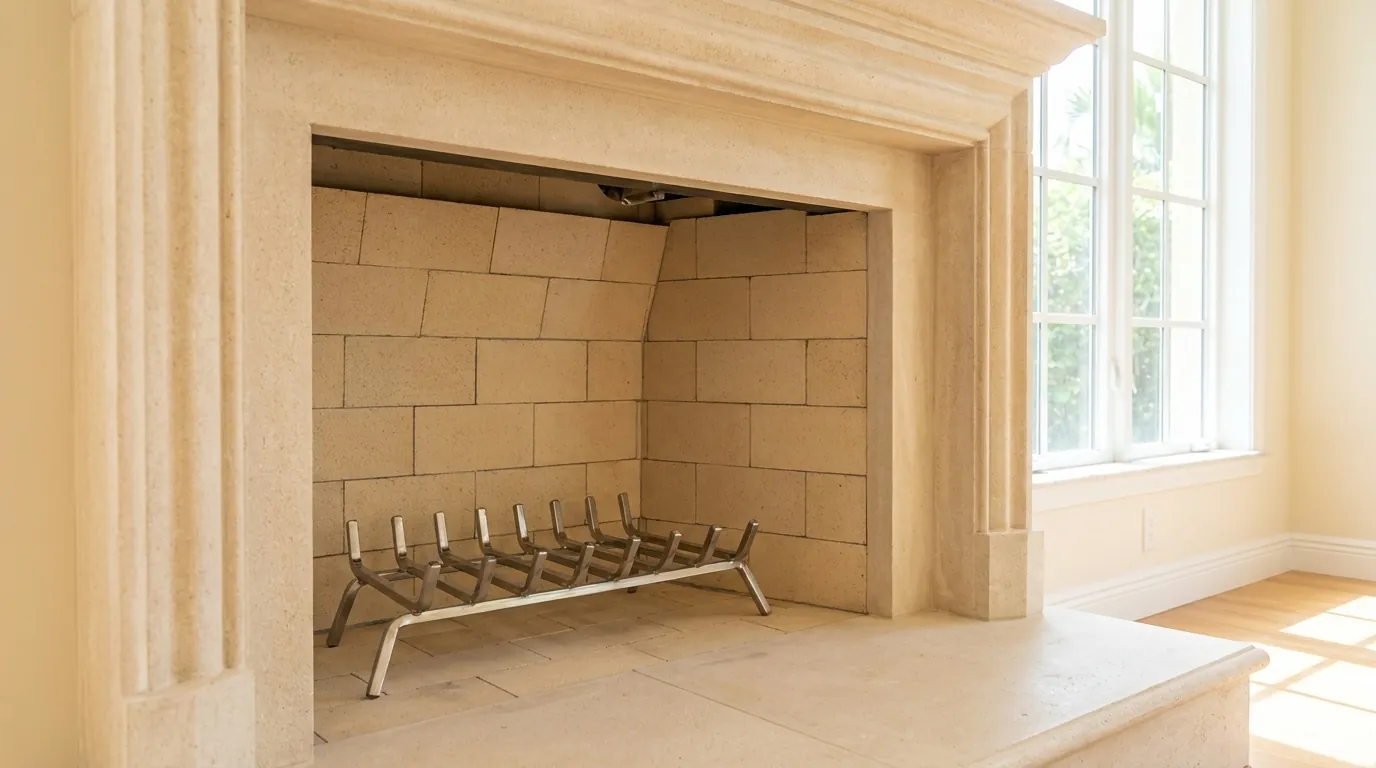
The masonry that takes the most heat
The firebox is the chamber the fire burns in, built from firebrick and heat-resistant mortar meant to withstand direct flame. The hearth is the masonry floor and the protected area in front of it. These parts take more thermal stress than anything else in the chimney, and over the years the firebrick cracks, the joints between the brick wash out, and the hearth develops gaps and spalls.
You'll notice it as crumbling or missing mortar between firebricks, cracked or flaking firebrick, gaps you can see light or brick behind, or debris collecting in the firebox floor. Damaged firebox masonry lets heat reach materials it shouldn't, so it's worth restoring rather than ignoring. Problems in the firebox often go hand in hand with issues higher up, such as a flue that needs stainless steel flue relining.
How firebox and hearth restoration is done
The work ranges from re-jointing to replacing firebrick, depending on how far the damage has gone.
-
Assess the firebox and hearth
We examine the firebrick, the joints, and the hearth to see what's salvageable and what needs replacing. Minor joint failure can be re-pointed; cracked or spalled firebrick is replaced.
-
Remove damaged brick and mortar
Failed firebrick and washed-out joints are removed carefully so the sound surrounding masonry stays intact. The surfaces are cleaned back so new material bonds properly.
-
Rebuild with heat-rated materials
New firebrick is set with refractory mortar rated for the heat of a firebox. Ordinary masonry mortar fails quickly next to flame, so the materials here are specific to the job.
-
Restore the hearth and joints
The hearth is patched or rebuilt as needed, and the joints are tooled to a clean, tight finish. The restored firebox is left with a consistent, sound surface ready for use.
How local conditions reach even the firebox
You might expect South Florida's climate to spare the interior masonry, but humidity and the high water table still play a role. Moisture migrating up through the masonry keeps joints damp, and any water entering from a failing crown, cap, or flashing can reach the firebox and accelerate the breakdown of mortar there. Fixing a firebox while water is still getting in from above rarely lasts.
That's why firebox restoration is best done once the top of the chimney is watertight. If your firebox damage is paired with water staining, it's worth addressing chimney flashing and leak repair first so the restored masonry stays dry.
Frequently asked questions
Can a damaged firebox be repaired, or does it need a full rebuild?
It depends on the extent of the damage. Washed-out joints and a few cracked bricks can often be re-pointed and spot-replaced, while widespread cracking or spalling calls for a larger rebuild of the firebox. An inspection tells you which applies.
Why can't regular mortar be used in the firebox?
Ordinary masonry mortar isn't made for direct flame and heat; it breaks down quickly next to a fire. Firebox work uses refractory mortar and firebrick rated for high temperatures, which is what lets the repair hold up to regular use.
Could my firebox damage be caused by a leak?
Yes. Water entering from a cracked crown, failed cap, or bad flashing can run down into the firebox and break down the mortar. That's why we check for water intrusion from above before restoring the firebox, so the repair isn't undermined.
Is firebox damage a safety concern?
Damaged firebox masonry can let heat reach materials behind and around it that are meant to be protected, so it's worth addressing rather than ignoring. Restoring the firebrick and joints keeps the fire contained where it belongs.
Talk to someone about your job
Call to describe the problem and get a quote for work in Tamarac, FL.