Tuckpointing and Brick Repointing
Crumbling mortar joints on your Tamarac chimney? Repointing and tuckpointing rake out failed mortar and restore the joints before water gets in.
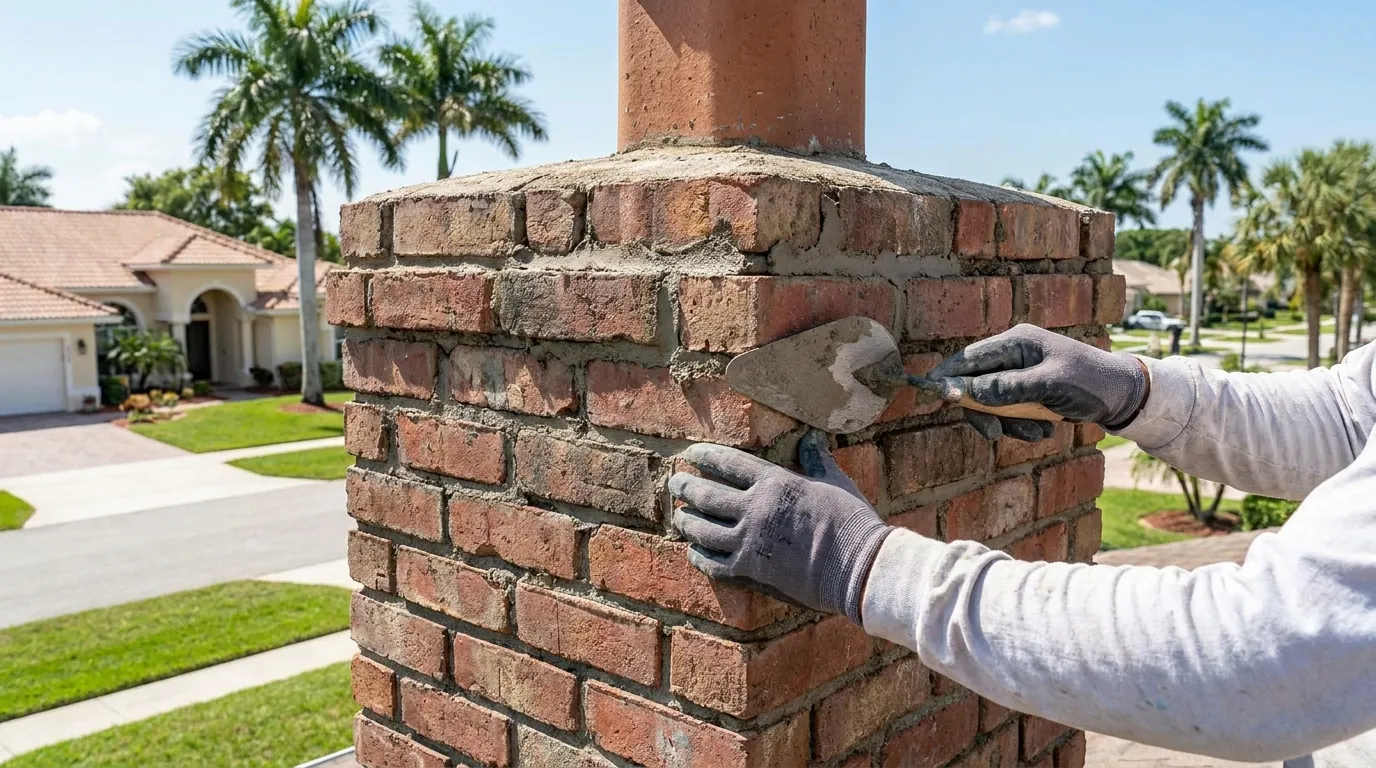
Why mortar joints fail first
Mortar is meant to be the sacrificial part of a chimney — softer than the brick, so it wears down instead of cracking the masonry. That means the joints are usually the first thing to go. On a Tamarac chimney you'll see it as joints that have receded below the brick face, mortar you can rake out with a screwdriver, sandy residue collecting on the roof, or hairline gaps where water now sits after a rain.
Repointing rakes out the failed mortar to a sound depth and packs in fresh mortar. Tuckpointing is a refined version of the same work that produces a crisp, uniform joint line for appearance as well as weather protection. Done in time, it stops water from reaching the brick interior and heads off the far larger job of a chimney rebuild above the roofline.
What repointing involves
The goal is a joint that sheds water and bonds to the brick — not just a smear of fresh mortar over old.
-
Rake out the failed joints
Deteriorated mortar is cut out to a consistent depth, deep enough to reach sound material so the new mortar has something to key into. Shallow patching over soft mortar peels away within a season or two.
-
Match the mortar to the brick
The replacement mortar is mixed to suit the age and hardness of the brick. Older, softer brick needs a softer mortar; using a mortar that's too hard transfers stress to the brick and causes it to spall.
-
Pack and tool the joints
Mortar is packed into the raked joints in layers and tooled to shed water. The joint profile is matched to the original so the repair blends in and drains properly.
-
Clean and cure
The brick faces are cleaned of excess mortar, and the fresh joints are protected while they cure. In Tamarac's humidity, curing is managed so the mortar sets properly rather than drying too fast or staying wet.
How the local climate changes repointing
High humidity and frequent heavy rain mean the joints on a South Florida chimney are rarely fully dry. Water that sits in a worn joint keeps the brick behind it damp, and coastal salt in the air accelerates the breakdown. That is why worn joints should be addressed before the brick faces start to spall — once the brick is damaged, repointing alone no longer solves the problem.
While the joints are open is also the best time to look at the crown and cap, since those direct water away from the top joints. If the crown is cracked, pairing the work with chimney crown and cap replacement keeps new joints from being soaked from above.
Frequently asked questions
How often does a chimney need repointing?
There's no fixed schedule — it depends on the original mortar, exposure, and how much weather the stack takes. In Tamarac's humid, salty air, joints tend to wear faster than in a dry climate, so it's worth checking the joints every few years and acting when mortar starts receding or raking out easily.
What happens if I leave failing joints alone?
Open joints let water into the masonry, which saturates the brick and spreads the damage. Left long enough, the brick faces spall and the stack can shift, turning an affordable repointing job into a full rebuild.
Is tuckpointing just cosmetic?
No. Tuckpointing restores the weather seal of the joint as well as its appearance. The crisp joint line is the visible result, but the real work is packing sound mortar into the raked joint so water sheds off instead of soaking in.
Why does the mortar mix matter so much?
Mortar that's harder than the brick will transfer stress and crack the brick faces over time. Matching the mortar to the brick's hardness — especially on older, softer brick — is what makes a repointing repair last rather than cause new damage.
Talk to someone about your job
Call to describe the problem and get a quote for work in Tamarac, FL.