Chimney Rebuild Above the Roofline
Spalling brick and loose joints above your roofline in Tamarac? Learn what a chimney rebuild above the roof involves and how to decide.
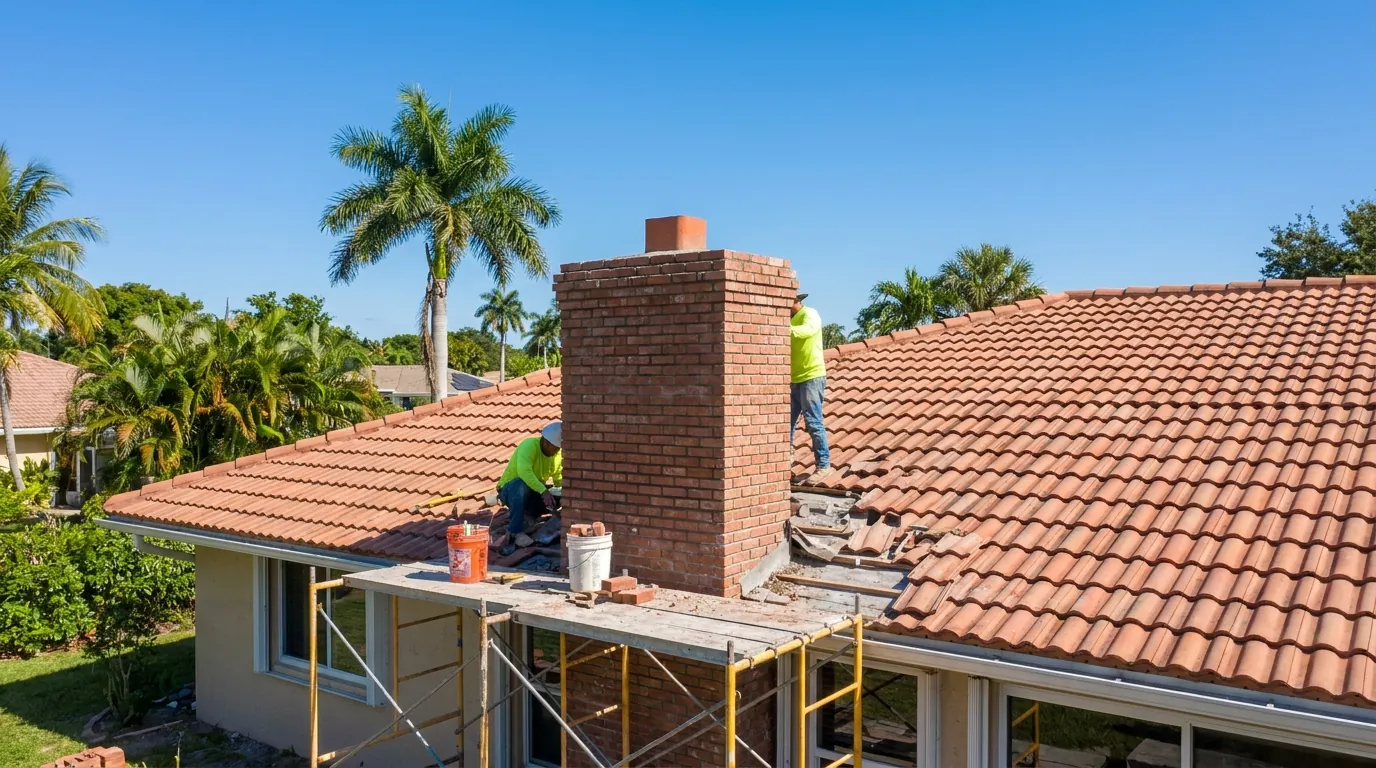
When the top of the chimney is past repointing
The section of a chimney above the roofline lives a hard life. It has no wall or soffit to shade it, no interior heat behind it, and nothing to break the wind-driven rain that blows in off the coast. In Tamarac, that exposed stack takes daily sun, long humid stretches, and the occasional cold snap that drives small amounts of moisture in and out of the brick. Over the years the brick faces flake away, the mortar joints crumble, and the whole top of the stack starts to lean or shed pieces onto the roof.
A rebuild above the roofline means taking the chimney down to a sound course of brick — usually just above where it passes through the roof — and laying it back up with new brick and fresh mortar. It is the right call when the damage is structural rather than cosmetic: when bricks are loose enough to move by hand, when the stack is visibly out of plumb, or when so many joints have failed that spot repair would not hold. If the damage is limited to surface mortar, tuckpointing and brick repointing is usually the better-value choice.
How a rebuild above the roofline is done
Every chimney is a little different, but the sequence follows the same logic from the roof up.
-
Assess and document the sound line
The chimney is inspected to find the lowest course of brick that is still solid and plumb. That course becomes the base of the rebuild. We also check the flashing, crown, and flue, since a rebuild is the natural time to address those together.
-
Protect the roof and dismantle
The roof around the chimney is protected, then the failed brick is taken down course by course by hand. The salvageable brick is set aside if you want to reuse a matching face; the rest is removed from the site.
-
Rebuild with matched brick and mortar
New courses are laid to the original dimensions, matching brick color and bond pattern as closely as possible. Mortar is mixed to suit the brick so the joints move with the masonry instead of cracking against it.
-
New crown, cap, and flashing tie-in
A fresh poured crown and a new cap finish the top, and the flashing is tied back in so water sheds away from the joint. These are the parts that most often fail first on a Tamarac chimney, so rebuilding without replacing them wastes the work.
Local conditions that shape the work
Tamarac's high humidity keeps the exposed masonry damp far longer than a dry inland climate would, and salt-laden coastal air speeds up the breakdown of older mortar and any steel inside the stack. Soft, older brick suffers most: once the hard outer face spalls off, the porous interior soaks up water and the decay accelerates. A rebuild is a chance to replace that soft brick with units better suited to the climate and to detail the top so water drains instead of ponding.
If your chimney is leaking as well as deteriorating, the rebuild should be coordinated with chimney flashing and leak repair so the new masonry and the roof work together. A new stack over old, failed flashing will leak just as the old one did.
Frequently asked questions
How do I know if I need a full rebuild instead of repointing?
If bricks are loose, the stack leans, or the top course sheds pieces onto the roof, the damage is structural and repointing won't hold. If the brick faces are sound and only the mortar joints are worn, repointing is usually enough. An inspection of the exposed section tells you which situation you're in.
Can you match my existing brick?
We match color, size, and bond pattern as closely as the available brick allows, and we can reuse salvageable original brick on the visible faces when it's still sound. Exact matches on very old brick are not always possible, but a close match on the exposed stack usually blends well.
Will a rebuild stop my chimney from leaking?
A rebuild addresses failed brick and joints, but leaks often come from the crown, cap, or flashing. That's why we replace the crown and cap and tie in the flashing as part of the rebuild — otherwise water finds the same path it always did.
What drives the cost of a rebuild above the roofline?
The main factors are the height of the section being rebuilt, access and roof pitch, whether matching brick is readily available, and whether the crown, cap, and flashing need replacing too. Taller, harder-to-reach stacks cost more to stage and work on safely.
Talk to someone about your job
Call to describe the problem and get a quote for work in Tamarac, FL.