Stainless Steel Flue Relining
Cracked clay tile or an unlined flue? Stainless steel flue relining in Tamarac restores a safe, smooth path for smoke and gases. Here's how it works.
What the liner does and why it fails
The flue liner is the inner channel that carries smoke, heat, and combustion gases safely up and out. Older chimneys here were built with clay tile liners, and many older stacks have no liner at all. Clay tile cracks over time — from heat, from moisture, and from the small amount of movement the masonry undergoes — and once it cracks, gases and heat can reach the surrounding brick and the house framing.
Signs a flue may need relining include pieces of clay tile falling into the firebox, a strong draft problem, staining or odor that won't clear, or an inspection that found cracked tiles or no liner. A stainless liner replaces that failed path with a single continuous, smooth channel that drafts well and stands up to the moisture and salt in South Florida's air. Relining is often paired with chimney crown and cap replacement, since both involve the top of the stack.
How a flue is relined
The work is done from the top of the chimney down, which is why access and crown condition matter.
-
Inspect and size the flue
The existing flue is inspected to confirm the liner is the problem and to size the new liner to the appliance or fireplace it serves. A liner that's too large or too small drafts poorly, so sizing is done to match the opening.
-
Clear the flue
Loose debris and broken tile are cleared so the new liner can run the full height without obstruction. Any obstructions in the masonry are addressed before the liner goes in.
-
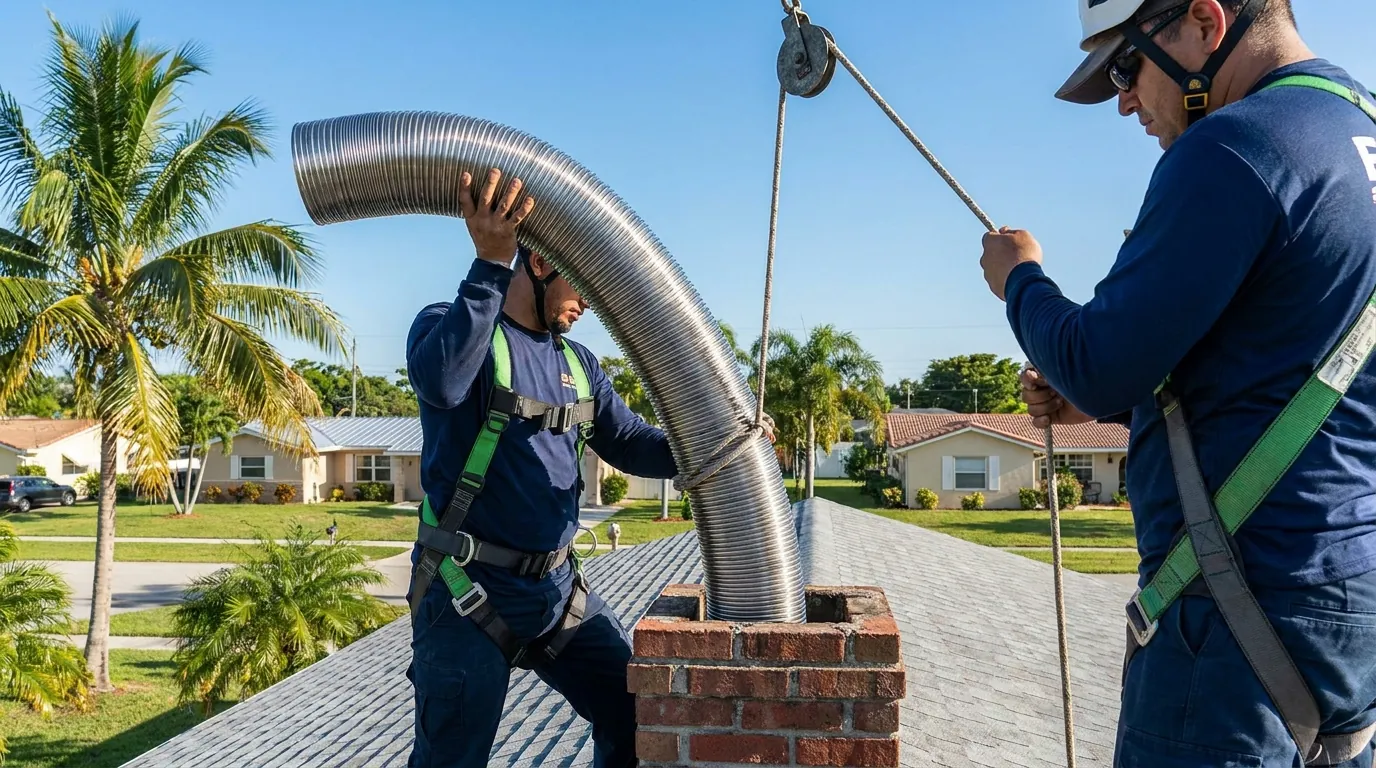
Run and connect the liner
A continuous stainless liner is lowered down the flue and connected at the firebox or appliance end. Insulation is added where appropriate to improve draft and keep heat off the surrounding masonry.
-
Top off and finish
The liner is secured at the top, tied to a new cap, and the crown is sealed around it. Finishing the top properly keeps water from running down the gap between liner and masonry.
Why relining comes up so often in this area
Chloride-heavy coastal air and persistent humidity are hard on older unlined clay flues, which draws steady demand for relining across Tamarac and the nearby towns. Moisture that collects inside an unlined or cracked flue has nowhere good to go; it keeps the masonry damp and speeds the breakdown of both the tile and the mortar around it. A stainless liner gives moisture and gases a clean route out and keeps them away from the brick.
Because relining is done from the top, it's the right time to confirm the crown, cap, and flashing are sound. If the top of your stack is also deteriorating, coordinating the liner with a chimney rebuild above the roofline avoids disturbing a finished liner later.
Frequently asked questions
How do I know if my flue needs relining?
Common signs are pieces of clay tile landing in the firebox, persistent draft or odor problems, or an inspection that found cracked tiles or no liner at all. A camera inspection of the flue confirms the condition before any work is recommended.
Why stainless steel instead of a new clay liner?
A stainless liner installs as one continuous piece and resists the moisture and salt in Tamarac's air better than clay. It also drafts smoothly and can be sized precisely to the appliance or fireplace, which clay tile sections can't match as easily.
Can a flue be relined without rebuilding the chimney?
Yes, in most cases the liner runs inside the existing masonry and the brickwork stays in place. A rebuild is only needed if the surrounding masonry is itself failing, which is why we inspect the whole stack before recommending an approach.
Does relining help with leaks?
Relining addresses the path for gases and some internal moisture, but leaks usually enter at the crown, cap, or flashing. We finish the liner into a new cap and sealed crown, and check the flashing, so water doesn't run down beside the new liner.
Talk to someone about your job
Call to describe the problem and get a quote for work in Tamarac, FL.